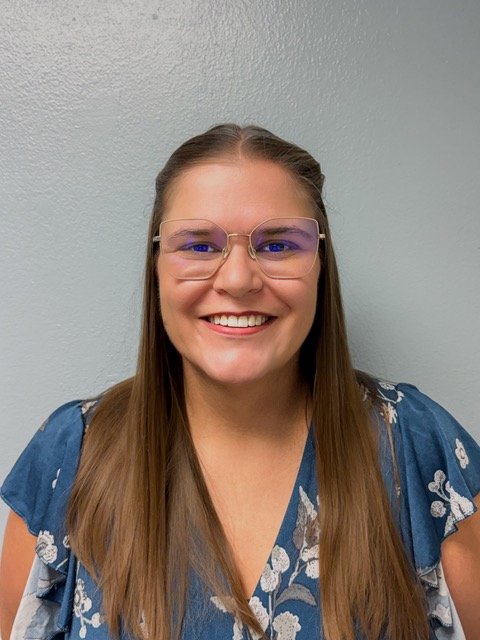
During Becca Rottacker’s interactions with domestic-violence survivors, she has learned that finances are oftentimes the main reason a victim won’t leave an abusive relationship.
Therefore, in her role as outreach advocate at the Family Crisis Center (FCC), Rottacker has organized a new program to support these financial-abuse victims. The first-ever FCC Financial Management Workshop can help guide victims to the resources they need to improve their circumstances.
The free workshop entails five classes on consecutive Thursdays, beginning July 9. Sessions will run from 5:30 to 6:30 p.m. at the FCC, 1924 Broadway in Great Bend. Registration is not required and confidentiality is assured.
“While it may seem counter-intuitive, financial abuse is not about money,” Rottacker said. “It is all about control. When someone else has control of the money, it can be immobilizing for the victim.”
Examples of financial abuse include:
- Your partner monitors your spending and yells at you for every purchase.
- Your partner gives you an allowance and you can spend money only on necessities.
- Your ability to work is negatively impacted, causing you to be late or absent. This could lead to being fired.
- Your partner takes money you earned and controls where you spend it.
“Through these workshop sessions, we will guide participants to personal growth,” Rottacker commented. “We can share some tools to help them move forward in their lives.”
At the beginning of each session, Rottacker will share a survivor’s story and provide a brief overview of the class. During the first class, an attorney from Kansas Legal Services will cover topics such as protection orders, divorce and child support.
Representatives of BMO Bank will make presentations at the remaining four classes.
Workshop topics include: Understanding Financial Abuse – Keeping Safe and Starting Over; Learning Financial Fundamentals; Mastering Credit Basics; Building Financial Foundations for Homes, Loans and Automobiles; and Budgeting Strategies for Saving, Investing, Insurance and Education.
Statistics
In 99 percent of domestic-violence cases, survivors face some type of financial abuse.
- Survivors are three times more likely to be homeless within two years.
- Fifty-two percent face debt they did not incur.
- Forty-six percent have damaged credit scores.
- Eighty-three percent face interference at work; 60 percent of these lose their jobs.
- Almost one in two women face domestic violence; for men, it’s two out of five.
Kylee Graves, FCC executive director, noted that it is statistics such as these, as well as survivor’s stories that led Rottacker to start this workshop.
“Becca proposed this idea and was willing to spend the time to dig into the topic,” Graves commented. “She deserves much of the credit for making this happen.
“Anyone in the community that is being financially abused is encouraged to join us. We want them to know we are here to support them and offer any resource available.”
For more information, call 620-793-9941.
The FCC serves Barton, Barber, Comanche, Edwards, Kiowa, Ness, Pawnee, Pratt, Rush and Stafford counties. The 24-hour crisis hotline is 866-792-1885.