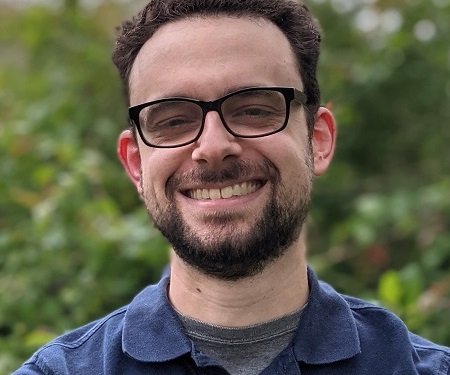
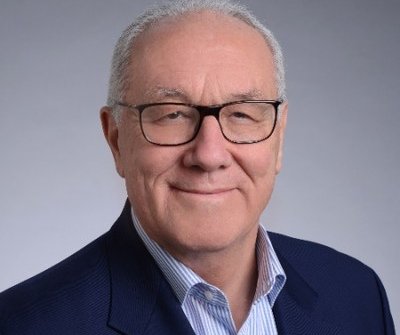
BY HANNA SKANDERA AND RICHARD GRABER
The namesakes of the foundations we lead – The Lynde and Harry Bradley Foundation and the Daniels Fund – were among America’s captains of industry. They began, like so many American success stories, with grit, uncertainty and dogged perseverance.
Lynde and Harry Bradley grew up in Milwaukee at the turn of the 20th century. They dropped out of high school to help support the family. The brothers worked wherever they could, saving and scraping on their way to building a small manufacturing business. It eventually became The Allen-Bradley Company, whose industrial automation and control equipment helped shape modern manufacturing.
Bill Daniels’ story follows a similar arc. Born in Greeley, Colorado, in 1920, his father lost his job during the Great Depression. At 12, Daniels sold ice cream in Dixie cups from the back of his bicycle to help his family out. Decades later, he would play an integral role in building the early cable television industry, earning a reputation as one of the “fathers of cable TV.”
Neither the Bradleys nor Daniels forgot how little they had while they were growing up. They also recognized that what they lacked materially was more than made up for by the privilege of being American.
They also carried a profound gratitude for the institutions and principles that made their journeys possible. That gratitude is a lasting part of their legacies.
Daniels gave to the communities that shaped him by investing in education, opportunity and local communities. The Bradleys poured their success back into supporting civic life, education and culture.
These are reminders of what the American experiment makes possible.
The United States has aspired, albeit sometimes imperfectly, to offer something powerful: equal treatment under the law and the freedom for citizens from any background to pursue happiness. That is why America remains the world’s greatest engine for entrepreneurship. In fact, the U.S. accounts for nearly half of global startup activity.
As we approach America’s 250th anniversary, it’s worth asking what has made that possible for two-and-a-half centuries.
It is a set of principles that must be continually reaffirmed and rediscovered by each generation.
First is the rule of law. Our Constitution and legal system create stability that allows people to take risks, invest, build and plan with the confidence that rights can be defended.
Second is a strong civil society. From its inception, Americans have relied on families, religious congregations, neighborhood groups and voluntary associations to solve problems.
Third is an informed citizenry. A free society depends on citizens who can think critically, debate honestly and pass on both knowledge and civic habits to the next generation.
These are among the pillars of American exceptionalism that made it possible for two high school dropouts in Milwaukee and a Depression-era kid with an ice cream bike to build companies that changed entire industries.
Today, the Daniels Fund and The Lynde and Harry Bradley Foundation continue the same tradition of local investment and civic identity. Together, our foundations have committed more than $3 billion over decades of grantmaking to strengthen civil society, defend the rule of law, support an informed citizenry and expand opportunity.
The American experiment has worked not because it guarantees success, but because it preserves the freedom to strive. Our responsibility at 250 years is to ensure that freedom and the institutions that sustain it remain strong for future generations.
Richard Graber is president and CEO of The Lynde and Harry Bradley Foundation. Hanna Skandera is president and CEO of the Daniels Fund. This piece originally ran in Newsweek.